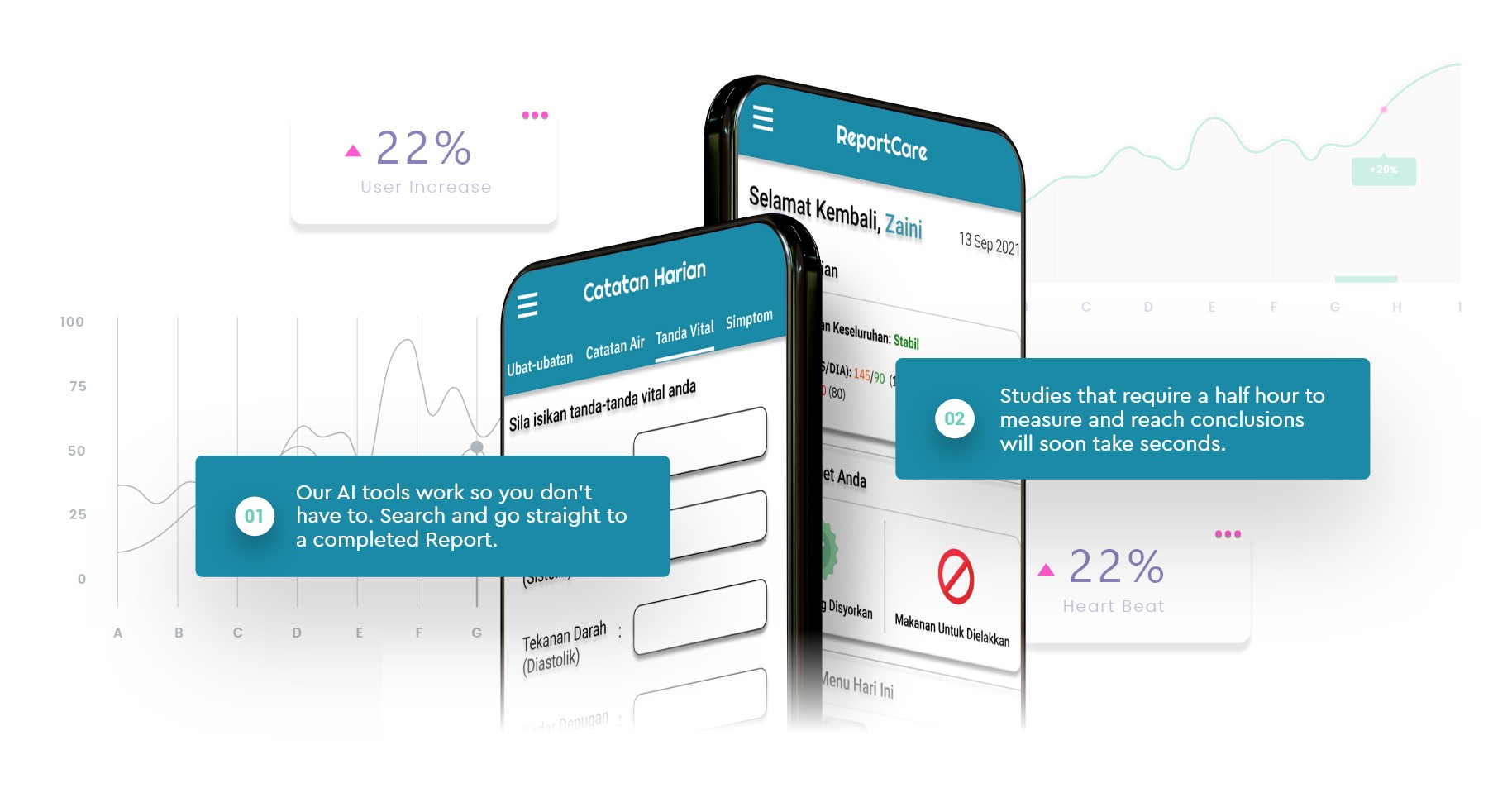
Heart failure accounts for approximately one in ten acute medical admissions in Malaysian hospitals, remaining one of the most common causes of readmission. Many patients struggle to identify early warning signs—especially when symptoms appear atypical—due to limited access to clinicians, complex treatment regimens, and informational gaps that are magnified in rural settings.
To bridge these gaps, Monash University Malaysia and partner hospitals within the Ministry of Health co-developed ReportCare, a heart failure management app designed for patients with implantable devices. Using machine learning, the platform captures real-time health trends, analyses them, and communicates directly with cardiac clinics so teams can intervene before a patient’s condition becomes critical.
ReportCare supports offline reporting so patients in remote areas can log symptoms using a conversational assistant and receive guidance on next steps. This proactive approach allows clinicians to deliver timely support without waiting for scheduled appointments or costly hospital visits.
Using Technology to Address Care Gaps
Software engineering is emerging as an essential pillar across healthcare and education. The pandemic accelerated teleconsultation, remote learning, and digital therapeutics, underscoring the need for adaptable, human-centred tools. Malaysia’s ecosystem is poised for growth, and collaborations such as GreenSHeart’s demonstrate how local innovation can meet global standards.
The Software Engineering Industry Experience Studio Project—part of Monash’s Bachelor of Software Engineering (Honours)—encourages students to design impactful solutions. Teams engaged clinicians, patients, and accessibility advocates to build applications tailored to real-world use cases.
Outstanding prototypes include:
- Chemocare, which helps oncology patients monitor treatment side effects and know when to escalate care.
- Deaf in Touch Everywhere (DITETM), offering on-demand access to Malaysian Sign Language interpreters for healthcare consultations.
- TakeMe, connecting older adults experiencing cognitive frailty with volunteers who can support their mobility.
These initiatives reflect Monash’s commitment to inclusivity, ensuring students collaborate with communities they may not typically encounter and cultivate empathetic design practices.
Gaining Real-World Experience
Students collaborated directly with industry partners and clinicians, gaining insight into both research workflows and digital health deployment. Access to Amazon Web Services (AWS) enabled rapid prototyping, allowing teams to focus on solving clinical needs rather than infrastructure hurdles.
Longer-term app development will continue with incoming cohorts and interested clients, ensuring that solutions requiring extended testing and regulatory validation can mature over time.
Stepping Outside the Box
Fireside chats with experts in software development and healthcare encouraged students to expand their ambitions. Many began the programme unsure about tackling ambiguous problems; by the end, they were exploring research pathways and embracing experimentation as a catalyst for breakthrough ideas.
As Dr. Nik Nailah Abdullah emphasises, failure is part of learning. The project serves as a safe environment for students to stretch their creativity, build resilience, and prepare for the realities of interdisciplinary innovation.
Source: Monash Malaysia and Amazon collaborate to help students develop impactful apps (focusmalaysia.my)